


Introduction
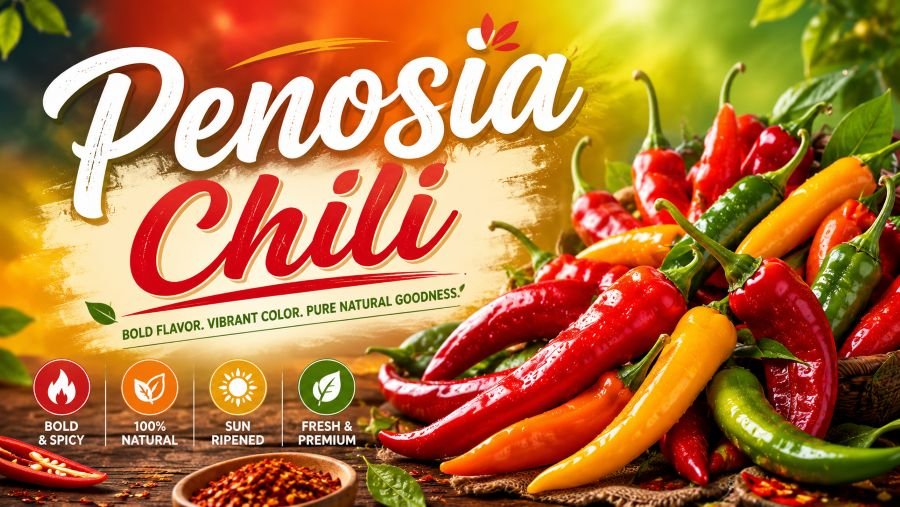
Penosia Chili is a food-related term that has started appearing in online searches. Some websites describe it as a small, colourful, hot pepper with a fruity taste. However, Penosia Chili is not clearly recorded as an officially recognised chilli species or established commercial variety.
Authoritative plant sources classify chilli peppers under the Capsicum genus. Kew Science lists recognised Capsicum species and many common pepper names, but Penosia does not appear as a widely established botanical name in the available records reviewed for this article.
This means Penosia Chili may be a local name, a recently created product name, a spelling variation, or an internet term rather than a scientifically documented chilli variety.
What Is Penosia Chili?
Penosia Chili is commonly presented online as a hot pepper used for adding spice, colour, and flavour to food. One online article claims that it is a small South American pepper with a heat level between 50,000 and 100,000 Scoville Heat Units.
However, that description does not provide reliable botanical studies, seed records, farming documents, or recognised food references to prove the pepper’s identity. The same article appears to be the main source repeating these details.
For this reason, readers should not treat the claimed origin, size, or heat rating as confirmed facts.
The safest description is:
Penosia Chili is an unclear or emerging name connected with hot chilli peppers, but its exact variety has not yet been verified by strong botanical sources.
Is Penosia Chili a Real Chilli Variety?
There is not enough dependable evidence to confirm Penosia Chili as a separate chilli variety.
Real chilli varieties normally have several identifying details, including:
- A recognised scientific or cultivar name
- Reliable seed or farming records
- A documented place of origin
- Clear fruit size and colour information
- A tested Scoville heat rating
- References from growers, universities, or plant databases
Penosia Chili currently lacks this level of public documentation.
This does not necessarily mean that the name is completely false. Small farms, restaurants, sauce producers, and local communities sometimes use their own names for peppers. A local name may exist for years without appearing in major international databases.
It is also possible that Penosia Chili is a brand name rather than the name of a plant.
Possible Meanings of Penosia Chili
People searching for Penosia Chili may be looking for one of several things.
A Local Pepper Name
A community or farmer may use Penosia as a local name for a known chilli type. Local names can be different from scientific names.
A Chilli Sauce or Food Product
Penosia may be the name of a homemade sauce, seasoning, chilli oil, restaurant dish, or packaged food.
A Spelling Variation
The keyword may be a misspelling of another pepper name. Chilli names often change when they are translated or written in different languages.
A Newly Created Internet Term
Some unusual keywords become popular after appearing in blogs, social media posts, or search suggestions. The information may then be repeated without being independently checked.
What Does Penosia Chili Taste Like?
There is no verified flavour profile for Penosia Chili.
Online descriptions suggest that it may have:
- Strong heat
- Light sweetness
- Fruity notes
- A fresh and sharp flavour
These qualities are common in many hot peppers, especially varieties belonging to the Capsicum annuum, Capsicum chinense, and Capsicum frutescens groups.
Kew Science explains that Capsicum is an important group of spice and vegetable crops. It includes many familiar types, such as cayenne, paprika, bird’s-eye chilli, sweet pepper, and red chilli.
Without a verified plant sample, it is impossible to give Penosia Chili an accurate taste or heat description.
How Hot Is Penosia Chili?
Some online content gives Penosia Chili a heat rating of 50,000 to 100,000 Scoville Heat Units. This rating should be treated as an unverified claim because no laboratory test or recognised chilli database is provided.
The heat in chilli peppers comes mainly from capsaicin. Capsaicin activates heat-sensitive receptors in the mouth, creating the burning feeling associated with spicy food.
A pepper’s heat can change according to:
- Its variety
- Growing temperature
- Soil conditions
- Water supply
- Fruit maturity
- Cultivation method
Therefore, appearance alone cannot provide an accurate Scoville rating.
Possible Cooking Uses
When a product sold as Penosia Chili is confirmed to be safe and edible, it may be used like other hot peppers.
Fresh Salsa
Finely chopped chilli can add heat to tomato, onion, lemon, and herb-based salsa.
Chilli Sauce
The pepper can be blended with vinegar, garlic, salt, and other ingredients to make a simple sauce.
Soups and Stews
A small amount may add warmth and depth to soups, curries, bean dishes, and meat stews.
Chilli Oil
Dried chilli can be added to properly prepared oil with suitable food-safety methods.
Pickles
Fresh peppers may be preserved in vinegar and served with rice, sandwiches, grilled food, or savoury snacks.
Dry Seasoning
Dried peppers can be crushed into flakes or ground into powder.
Anyone using an unfamiliar pepper should begin with a very small amount. Gloves may also help prevent skin and eye irritation.
Does Penosia Chili Have Health Benefits?
No health studies have examined Penosia Chili as a separate variety.
Chilli peppers generally contain capsaicin and other plant compounds. Capsaicin is also used in some approved topical products for pain relief. However, research into the wider health effects of eating chilli remains mixed, and strong medical claims should be avoided.
A large scientific review found that chilli consumption may be connected with several health outcomes, but the overall evidence is not clear enough to promise specific benefits.
Chilli should be enjoyed as food, not treated as a cure for illness.
How to Identify Penosia Chili in a Local Market
Ask the seller for more information before buying a pepper under this name.
Important questions include:
- What is its scientific or common variety name?
- Where was it grown?
- Is it fresh, dried, powdered, or processed?
- How hot is it compared with jalapeño or bird’s-eye chilli?
- Does the package name a producer?
- Are ingredients and safety details clearly displayed?
A trustworthy seller should be able to explain the pepper’s origin or provide clear product information.
Avoid purchasing unidentified powders, sauces, or seeds from sellers who make unsupported health claims.
Growing Seeds Sold as Penosia Chili
Seeds carrying an unfamiliar name should be purchased carefully.
Check whether the seller provides:
- A botanical name
- A photograph of the mature fruit
- Germination information
- Plant height and growing time
- Verified customer reviews
- The original seed source
Pepper plants normally prefer warm conditions, good sunlight, and soil that drains well. FAO information notes that recognised pepper crops include species such as Capsicum annuum and Capsicum frutescens, which originated in tropical America.
Without a recognised variety name, the final plant grown from “Penosia Chili” seeds may be difficult to predict.
Frequently Asked Questions
Is Penosia Chili an official pepper?
It is not currently well documented as an officially recognised chilli species or established cultivar.
Where does Penosia Chili come from?
One blog associates it with South America, but reliable evidence confirming that origin was not found.
Is Penosia Chili very hot?
Its exact heat level is unknown. Claims of 50,000 to 100,000 Scoville Heat Units have not been supported by a reliable test.
Can Penosia Chili be used in cooking?
A product sold under this name may be used like another hot pepper, but buyers should first confirm that it is a safe and correctly labelled food product.
Where can I buy Penosia Chili?
It may appear through specialist seed sellers, local food markets, or online shops. Check the botanical name, producer details, ingredients, and customer information before purchasing.
Is Penosia Chili healthy?
There are no specific health studies on Penosia Chili. General chilli peppers contain capsaicin, but they should not be promoted as a treatment for disease.
Conclusion
Penosia Chili is an interesting search term, but its true identity remains uncertain. Online descriptions present it as a colourful, spicy pepper, yet strong botanical and agricultural evidence is missing.
It may be a local label, product name, spelling variation, or recently created online term. Until reliable information becomes available, consumers should avoid repeating unsupported claims about its origin, heat level, history, or medical benefits.
When buying Penosia Chili seeds or food products, look for a recognised Capsicum name, clear producer information, safe packaging, and an honest description.
