


Introduction
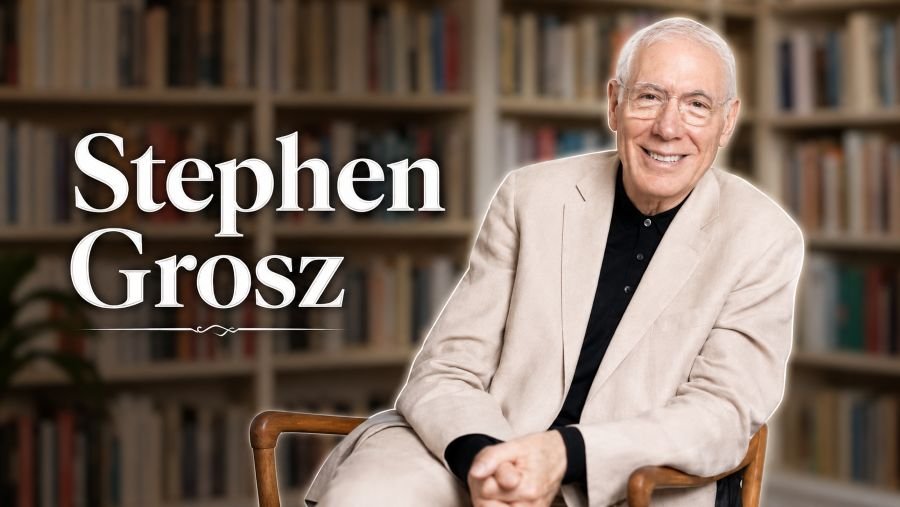
Stephen Grosz is an American-born psychoanalyst and bestselling author who lives and works in London. He is best known for writing The Examined Life, a collection of powerful stories based on lessons learned during psychoanalytic sessions.
Grosz has worked with patients for more than 40 years. His writing explores why people repeat harmful behaviour, resist change, hide difficult feelings and struggle to understand themselves.
His books make complex psychological ideas easier for ordinary readers to understand. Instead of using heavy medical language, he explains human behaviour through short and memorable stories.
Stephen Grosz Quick Facts
| Detail | Information |
|---|---|
| Full name | Stephen Grosz |
| Birth year | 1952 |
| Birthplace | Indiana, United States |
| Nationality | American-born |
| Profession | Psychoanalyst and author |
| Education | University of California, Berkeley and Balliol College, Oxford |
| Current home | London, England |
| Famous for | The Examined Life |
| Second major book | Love’s Labour |
| Career experience | More than 40 years |
| Professional role | Training and supervising psychoanalyst |
| Main subjects | Human behaviour, relationships, loss, love and personal change |
Who Is Stephen Grosz?
Stephen Grosz is a practising psychoanalyst, writer and teacher. He listens to people describe their memories, fears, relationships, dreams and emotional problems.
A psychoanalyst does not simply give quick advice. The work involves helping people understand the hidden thoughts and feelings that may be influencing their actions.
Grosz became internationally known after publishing The Examined Life in 2013. The book introduced millions of readers to psychoanalysis through short stories inspired by his clinical work.
Readers can learn more about his professional position through the official Stephen Grosz profile at the British Psychoanalytical Society.
Stephen Grosz’s Early Life
Stephen Grosz was born in Indiana, United States, in 1952.
Reliable professional biographies confirm his birth year, but they do not provide a verified day or month of birth. For this reason, websites should not publish an exact birthday unless a stronger official source becomes available.
Only limited information about his childhood has been made public. Grosz has focused his public interviews mainly on his education, professional training, patients and books.
His move from the United States to Britain became an important part of his personal and professional journey. He eventually settled in London and developed a long career within the British psychoanalytic community.
Stephen Grosz’s Education
Stephen Grosz studied politics and psychology at the University of California, Berkeley.
He later moved to Britain and studied Philosophy, Politics and Economics at Balliol College, Oxford. This course is commonly known as PPE.
These subjects helped him examine how people think, behave and make decisions. Psychology gave him an academic base for understanding the mind, while philosophy and politics encouraged him to explore ideas, choices and human relationships.
Grosz later completed specialist psychoanalytic training in London.
How Did Stephen Grosz Become a Psychoanalyst?
Stephen Grosz first experienced psychoanalysis while he was living in the United States.
After moving to London, he continued his training and worked with respected psychoanalysts. His training analyst was Amadeo Limentani, an influential Italian-born psychoanalyst who worked in Britain.
Grosz was also influenced by experienced analysts including Hanna Segal, Anne-Marie Sandler and Ignês Sodré.
This training taught him to listen carefully. In psychoanalysis, a person’s pauses, repeated stories, dreams and forgotten memories may be as important as the words they speak directly.
Grosz has now spent more than four decades working with patients.
Stephen Grosz’s Psychoanalytic Career
Stephen Grosz built his professional career in London.
He became a training and supervising analyst with the British Psychoanalytical Society. This means he not only works with patients but also helps other psychoanalysts develop their professional skills.
Grosz has taught clinical technique at the Institute of Psychoanalysis. He has also taught psychoanalytic theory at University College London.
Earlier in his career, he worked as a consultant adult psychotherapist at the Portman Clinic. The clinic is known for working with people experiencing complex psychological and behavioural difficulties.
His career has included:
- Working directly with patients
- Training future psychoanalysts
- Supervising clinical work
- Teaching psychoanalytic theory
- Writing books and articles
- Speaking at literary and psychological events
What Does Stephen Grosz Believe About Therapy?
Stephen Grosz believes that understanding should come before advice.
People sometimes enter therapy because they want another person to tell them exactly what to do. However, Grosz does not present psychoanalysis as a list of simple answers.
He tries to help patients understand why they behave in a certain way. Once they recognise their hidden fears and desires, they may be able to make clearer decisions.
One important idea in his work is that people can want change while also being frightened of it.
A familiar problem may feel safer than an unknown future. A person may therefore repeat painful behaviour because it gives them a strange feeling of comfort or control.
The Examined Life
Stephen Grosz published The Examined Life: How We Lose and Find Ourselves in 2013.
The book is based on lessons collected from around 25 years of clinical work and more than 50,000 hours of conversations.
It contains short case histories about people facing problems involving family, grief, love, lies, fear, ambition and personal identity.
The stories are based on real clinical experiences, but identifying details were changed to protect patient privacy.
Why Did The Examined Life Become Popular?
The Examined Life became popular because it makes psychology feel human and understandable.
Readers do not need professional medical training to follow the stories. Each chapter presents a problem and then slowly reveals the feelings or experiences hidden beneath it.
The book became a Number One Sunday Times bestseller. It was translated into more than 30 languages and selected as a BBC Radio 4 Book of the Week.
It was also adapted for the stage and longlisted for the Guardian First Book Award.
The success of the book made Grosz known far beyond the world of professional psychoanalysis.
Readers interested in other writers who explain emotional subjects clearly may also enjoy the story of Joseph Coelho and his influential writing career.
Love’s Labour
Stephen Grosz published his second major book, Love’s Labour, in the United Kingdom in September 2025.
The book draws on more than 40 years of conversations with patients. It focuses mainly on love, marriage, desire, betrayal, grief and emotional connection.
Its stories examine why people sometimes damage the relationships they value most.
Some people may fear being abandoned. Others may avoid emotional closeness because loving another person also creates the possibility of loss.
Grosz explains that love is not only a feeling. It also requires work, honesty, attention and the willingness to understand another person.
The book was published in the United States under the title Love’s Labor: How We Break and Make the Bonds of Love.
Stephen Grosz’s Writing Style
Stephen Grosz writes in a clear, calm and thoughtful style.
His chapters often feel like short stories. He introduces a person and a difficult problem before slowly revealing the deeper emotional meaning behind the situation.
His writing has been influenced by authors known for careful observation and short fiction. These include Anton Chekhov, Raymond Carver, Franz Kafka, John Cheever and Thomas Mann.
Grosz avoids unnecessary professional terms. This allows readers to understand complicated ideas without feeling as if they are reading a medical textbook.
His writing commonly explores:
- Fear of change
- Family relationships
- Grief and loss
- Love and betrayal
- Childhood memories
- Self-deception
- Emotional avoidance
- The search for identity
- The need to be heard
- Repeated harmful behaviour
For another profile of a respected writer, read about David Profumo and his work as an author and journalist.
What Can Readers Learn from Stephen Grosz?
Stephen Grosz’s work teaches readers that behaviour usually has a reason, even when that reason is difficult to see.
A person who appears angry may actually feel frightened. Someone who avoids love may be protecting themselves from future loss. A person who refuses to change may fear losing the identity they already understand.
His books also show the importance of listening.
Careful listening can help people feel recognised. It can also reveal important details hidden inside ordinary stories, repeated phrases and long silences.
Another lesson is that emotional problems do not always have quick solutions. Understanding the mind can require time, patience and honesty.
Stephen Grosz on Change
Change is one of the most important themes in Stephen Grosz’s work.
He explains that people often say they want a different life while continuing to make the same choices.
This does not always mean they are weak or lazy. Their behaviour may protect them from a fear they have not yet recognised.
For example, someone may avoid a new opportunity because failure would hurt. Another person may reject a loving relationship because they fear losing it later.
Psychoanalysis tries to uncover these hidden fears. Understanding them does not guarantee immediate change, but it can make change possible.
Stephen Grosz on Grief and Loss
Grosz does not treat grief as a simple process with a clear ending.
He has questioned the popular idea of complete “closure.” A person may continue to remember and miss someone long after a death or separation.
Grief can return through a place, sound, date, dream or ordinary memory.
His work suggests that healing does not require people to erase their loss. Instead, they may learn how to carry it while continuing to live.
Stephen Grosz on Children and Praise
Stephen Grosz has also written about the way adults praise children.
He argues that automatic praise is not always the same as real attention.
Repeatedly saying “well done” may end a conversation. Asking a child about their picture, idea or activity can show deeper interest.
His message is not that parents should never praise children. It is that children also need adults to be curious about what they are thinking and creating.
Is Stephen Grosz Still Working?
Yes. As of August 2026, Stephen Grosz remains publicly identified as a practising psychoanalyst and author.
His official professional profile describes him as a training and supervising analyst. He has also continued participating in interviews, public conversations and literary events connected with Love’s Labour.
There has been no verified announcement that he has retired from psychoanalysis or writing.
Stephen Grosz’s Personal Life
Stephen Grosz lives in London.
He has shared some limited information about his family in established newspaper interviews, but he generally keeps his private life separate from his public work.
His public reputation is mainly based on his psychoanalytic career, books, teaching and ideas about human behaviour.
Details about his religion, private finances, property, health and daily lifestyle have not been reliably established through strong public sources. Such information should not be guessed.
Stephen Grosz’s Net Worth
Stephen Grosz’s net worth has not been confirmed by a reliable financial or official source.
Online estimates without supporting records should not be treated as facts.
His known professional income sources may include his psychoanalytic work, book sales, publishing rights, speaking appearances and literary events. However, exact earnings have not been publicly verified.
Why Is Stephen Grosz Important?
Stephen Grosz has helped make psychoanalysis understandable to a worldwide audience.
Many books about psychology use difficult language. Grosz instead presents emotional ideas through human stories that are easy to follow.
His work encourages readers to look beneath the surface of behaviour. It shows that listening carefully can reveal fears, desires and memories that people may not fully understand themselves.
The worldwide success of The Examined Life also proved that readers remain interested in thoughtful stories about the human mind.
Frequently Asked Questions
Who is Stephen Grosz?
Stephen Grosz is an American-born psychoanalyst and bestselling author who lives and practises in London.
What is Stephen Grosz famous for?
He is best known for writing The Examined Life: How We Lose and Find Ourselves.
When was Stephen Grosz born?
Stephen Grosz was born in 1952. A reliable exact day and month of birth have not been publicly confirmed.
How old is Stephen Grosz?
He is approximately 73 or 74 during 2026, depending on his birthday. His exact birth date is not confirmed by the strongest sources reviewed.
Where was Stephen Grosz born?
He was born in Indiana, United States.
Where does Stephen Grosz live?
He lives and works in London, England.
What did Stephen Grosz study?
He studied politics and psychology at the University of California, Berkeley. He later studied Philosophy, Politics and Economics at Balliol College, Oxford.
Is Stephen Grosz a real psychoanalyst?
Yes. He is a practising psychoanalyst and a training and supervising analyst connected with the British Psychoanalytical Society.
What books has Stephen Grosz written?
His two best-known books are The Examined Life and Love’s Labour.
When was The Examined Life published?
The Examined Life was first published in 2013.
When was Love’s Labour published?
The UK edition of Love’s Labour was published in September 2025. A US edition followed under the title Love’s Labor.
Is Stephen Grosz still working?
Yes. As of August 2026, he remains publicly listed as a practising psychoanalyst and author.
What is Stephen Grosz’s net worth?
No reliable source has confirmed his net worth.
Conclusion
Stephen Grosz is an experienced psychoanalyst who has spent more than 40 years listening to people and studying human behaviour.
Born in Indiana in 1952, he studied at the University of California, Berkeley and Balliol College, Oxford before developing his psychoanalytic career in London.
His bestselling book The Examined Life brought psychoanalytic ideas to readers around the world. His later book, Love’s Labour, explores the difficult work required to build and protect human relationships.
Grosz’s greatest strength is his ability to turn complicated emotional ideas into clear stories. His work reminds readers that understanding ourselves requires patience, honesty and careful attention.
