


Introduction
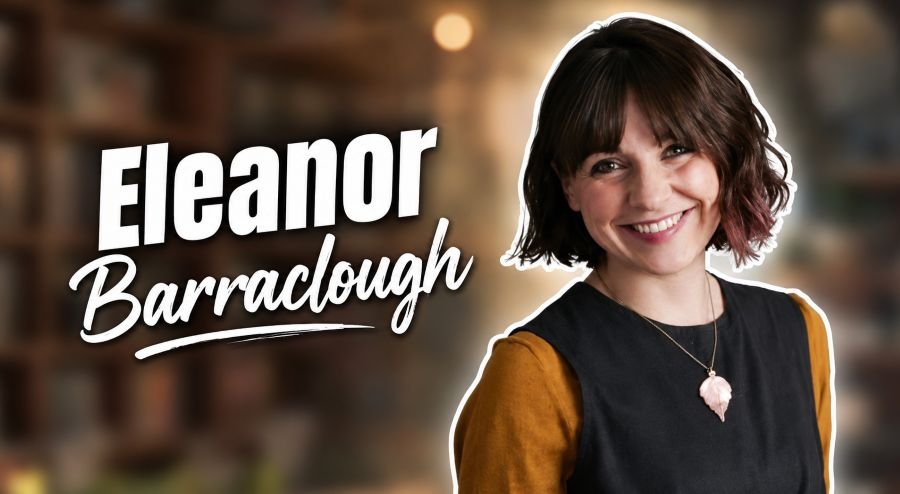
Eleanor Barraclough is a British historian, writer, university academic and broadcaster. She is best known for making Viking and medieval history understandable to ordinary readers.
Instead of writing only about kings, warriors and famous battles, she explores the daily lives of ordinary Viking Age people. Her work introduces readers to children, craftspeople, travellers, traders, enslaved people and storytellers whose experiences are often missing from traditional history books.
As of July 2026, Barraclough is a Reader in Public History at Bath Spa University. She has also worked with the BBC and written respected books about Viking voyages, Old Norse stories and medieval northern culture.
Eleanor Barraclough Quick Facts
| Detail | Information |
|---|---|
| Full name | Eleanor Rosamund Barraclough |
| Known as | Eleanor Barraclough |
| Profession | Historian, author, academic and broadcaster |
| Current role | Reader in Public History at Bath Spa University |
| Main expertise | Viking history, medieval history and Old Norse literature |
| Education | University of Cambridge |
| Major books | Beyond the Northlands and Embers of the Hands |
| Known for | Explaining the everyday lives of Viking Age people |
| Broadcasting work | Mainly BBC radio and history programmes |
| Major recognition | BBC New Generation Thinker |
| Current location | London, England |
Who Is Eleanor Barraclough?
Eleanor Barraclough is a historian who studies the Viking Age, medieval literature, northern landscapes and Old Norse-Icelandic stories.
She combines academic research with simple storytelling. This allows people without a university background in history to understand difficult historical ideas.
Barraclough does not present the Vikings as one simple group of violent raiders. Her work shows that Viking society also included farmers, craftspeople, merchants, children, poets, travellers and many other ordinary people.
Her research covers medieval history, environmental history, Arctic studies, public history and cultural heritage. Her official Bath Spa University profile also identifies northern studies and environmental history as important parts of her work.
Eleanor Barraclough’s Education
Barraclough studied Anglo-Saxon, Norse and Celtic at the University of Cambridge.
This subject allowed her to explore the languages, literature, history and cultures of medieval northern Europe. It included Old Norse stories, Viking travel and the development of communities across the North Atlantic.
She later completed a PhD at Cambridge. Her doctoral work focused on Old Norse-Icelandic sagas, landscapes and the ways medieval people understood the environments around them.
After completing her PhD, she received a Leverhulme Early Career Fellowship at the University of Oxford. She later held academic positions at Durham University before joining Bath Spa University.
Her educational journey shows how language, literature, geography and archaeology can work together. She does not study historical writing as a collection of old words alone. She also examines the real places, physical objects and natural environments connected with those stories.
Readers interested in other successful writers with a Cambridge education can also explore the story of Lucy Caldwell and her award-winning writing career.
How Did Eleanor Barraclough Begin Her Career?
Barraclough began her professional career in university research.
After earning her doctorate, she moved to the University of Oxford as a Leverhulme Early Career Fellow. Her research during this period helped lead to her first major book, Beyond the Northlands: Viking Voyages and the Old Norse Sagas.
She later worked at Durham University, where she taught and researched medieval history and literature.
Her ability to explain complex ideas also helped her move into public broadcasting. She became one of the BBC and Arts and Humanities Research Council’s New Generation Thinkers.
The New Generation Thinkers programme supports academics who can communicate their research clearly through radio and other public media. This recognition helped Barraclough share medieval and Viking history with a much wider audience.
Eleanor Barraclough at Bath Spa University
As of July 2026, Eleanor Barraclough works as a Reader in Public History in the School of Writing, Publishing and the Humanities at Bath Spa University.
Her specialist areas include:
- Medieval history
- Environmental history
- Public history and heritage
- Northern and Arctic studies
- Old Norse language and literature
- Viking Age travel and settlement
- Medieval landscapes and storytelling
Her university work includes research, teaching, academic publishing and projects designed to make history more accessible to the public.
Barraclough often begins with a real place or object. She then examines the historical, cultural and imaginative meanings connected with it.
This approach has taken her to Viking ruins in Greenland, burial sites in Orkney and other locations across the northern world.
Beyond the Northlands
Barraclough published Beyond the Northlands: Viking Voyages and the Old Norse Sagas in 2016.
The book explores the long journeys described in medieval Icelandic sagas. It examines how Vikings and other northern travellers moved through areas including Greenland, North America, the Arctic and parts of Europe.
However, the book does more than follow travel routes.
It also asks how medieval storytellers remembered distant lands. Barraclough studies the difference between real journeys, cultural memory and imaginative storytelling.
The book grew from her academic research into Viking travel, medieval Iceland and northern landscapes. It helped establish her public reputation as an expert on Viking voyages and Old Norse literature.
Imagining the Supernatural North
Barraclough was also one of the editors of Imagining the Supernatural North, published in 2016.
The academic collection explores how northern regions have been connected with supernatural ideas, mystery and imagination.
For centuries, writers and travellers have sometimes presented the far north as a strange or magical place. The book studies how these ideas developed and how they influenced literature and culture.
This work reflects Barraclough’s wider interest in the relationship between real geography and human imagination.
Embers of the Hands
Embers of the Hands: Hidden Histories of the Viking Age is one of Eleanor Barraclough’s best-known books.
The hardback edition was published in September 2024. A paperback edition followed in June 2025.
The book tells Viking history through everyday objects and small pieces of surviving evidence. These include combs, tools, messages, carvings, jewellery, children’s drawings and religious objects.
Through these items, Barraclough reconstructs the lives of people who rarely appear in royal records or famous sagas.
The book discusses:
- Children and family life
- Traders and travellers
- Craftspeople and artists
- Enslaved people
- Religious practices
- Writing and runes
- Work and domestic life
- Viking Age relationships
- Journeys across the medieval world
This approach helps readers see Vikings as real human beings rather than simple characters wearing helmets and carrying weapons.
Why Is Embers of the Hands Important?
Many popular Viking stories focus on powerful rulers, raiders and battles.
Embers of the Hands takes a different path. It looks at small objects that reveal how ordinary people worked, communicated, travelled, worshipped and raised families.
Barraclough has explained that she wanted the book to focus on the ordinary humans behind the large story of the Viking Age.
Her research involved travel to Greenland, Iceland, the Hebrides, the Northern Isles, Arctic Scandinavia and Svalbard. These locations helped her understand the difficult landscapes in which northern communities lived.
The book also explains that historical evidence is often incomplete. A single object may provide an important clue, but it cannot answer every question.
Barraclough encourages readers to accept these gaps instead of turning uncertain ideas into false facts.
Awards and Recognition
Embers of the Hands received major attention from readers, publishers and historical organisations.
Its confirmed recognition includes:
- Longlisted for the 2025 Women’s Prize for Non-Fiction
- Shortlisted for the 2025 Wolfson History Prize
- Selected as a Times History Book of the Year for 2024
- Recognised by major international publications and reviewers
The book was praised for combining serious historical research with clear and engaging storytelling.
Barraclough is also a Fellow of the Royal Historical Society and a Fellow of the Society of Antiquaries.
These professional honours reflect her contribution to historical research and public understanding of the past.
Eleanor Barraclough’s BBC Career
Eleanor Barraclough has worked extensively as a broadcaster, mainly with the BBC.
Her broadcasting covers Viking culture, medieval literature, northern landscapes, forests, environmental history, mythology and Arctic regions.
Radio and television allow her to reach people who may never read an academic journal. She explains historical subjects using stories, locations, objects and interviews.
Her work as a BBC New Generation Thinker helped connect her university research with public broadcasting.
Barraclough’s career demonstrates that historians do not have to remain inside universities. They can share reliable knowledge through documentaries, radio programmes, podcasts, books and public events.
Her Approach to Public History
Public history means presenting knowledge about the past to audiences outside traditional academic settings.
Barraclough believes strong historical writing should combine careful research with readability.
She has explained that historians must simplify difficult ideas without removing uncertainty or changing the evidence. This can be challenging because sources may disagree or leave important questions unanswered.
Her work teaches readers that good history is not always a perfect story with one clear answer.
Responsible historians must explain:
- What the evidence shows
- What remains uncertain
- Where experts disagree
- Which ideas are interpretations
- Why historical context matters
This approach is especially important when history is used to support modern political or cultural claims. Barraclough argues that honest history should recognise the contradictions and complexity of human experience.
Research into Forests and Northern Environments
Barraclough’s interests go beyond Vikings and sagas.
She has also researched the role of trees, woods and forests in northern European culture.
Her project, Into the Forest, examined how forests appeared in the history, languages and literature of Germanic-speaking northern Europe.
Forests were not only sources of wood. They could represent danger, protection, mystery, lawlessness, religion or the boundary between human society and the unknown.
This research connected environmental history with medieval literature and cultural memory.
It also showed how people’s ideas about nature can change across different places and periods.
Eleanor Barraclough’s Writing Style
Barraclough writes in a clear, visual and story-based style.
She often starts with a small object, such as a comb or piece of carved wood. She then uses that object to introduce a much larger historical world.
Her writing does not hide the difficulty of studying the distant past. She openly explains when evidence is limited or when historians have more than one possible interpretation.
This balance makes her work useful to both general readers and people studying history.
Her style shares some qualities with other authors who turn complex subjects into understandable stories. Readers can explore another example through Amika George’s work as an author and public campaigner.
Why Is Eleanor Barraclough Important?
Eleanor Barraclough is important because she helps people see Viking history from a wider viewpoint.
She moves beyond the familiar picture of male warriors and violent raids. Her books make room for children, women, traders, craftspeople, enslaved individuals and other people whose experiences were rarely written down.
She also connects historical research with real landscapes and surviving objects.
This gives readers a stronger understanding of how people lived, worked and thought hundreds of years ago.
Her career also shows the value of public history. Through books, university teaching and broadcasting, she makes specialised research available to a worldwide audience.
Frequently Asked Questions
Who is Eleanor Barraclough?
Eleanor Barraclough is a British historian, author, academic and broadcaster. She specialises in Viking history, medieval literature, Old Norse culture and northern environments.
What is Eleanor Barraclough famous for?
She is famous for explaining Viking history through ordinary people, physical objects and medieval stories. She is also known for her books and BBC broadcasting.
Where does Eleanor Barraclough work?
As of July 2026, she is a Reader in Public History at Bath Spa University.
What did Eleanor Barraclough study?
She studied Anglo-Saxon, Norse and Celtic at the University of Cambridge. She also completed a PhD connected with Old Norse-Icelandic literature and landscapes.
What books has Eleanor Barraclough written?
Her major books include Beyond the Northlands: Viking Voyages and the Old Norse Sagas and Embers of the Hands: Hidden Histories of the Viking Age.
She also co-edited Imagining the Supernatural North.
What is Embers of the Hands about?
The book explains Viking Age life through ordinary objects such as combs, carvings, tools, messages and personal belongings.
Is Eleanor Barraclough a BBC presenter?
She is a historian and broadcaster who has contributed to and presented historical programmes, particularly for BBC radio and television.
Did Embers of the Hands win any recognition?
The book was shortlisted for the 2025 Wolfson History Prize and longlisted for the 2025 Women’s Prize for Non-Fiction.
What type of history does Eleanor Barraclough study?
She studies medieval, Viking, environmental, northern and Arctic history. She also researches Old Norse literature, cultural heritage and public history.
Final Thoughts
Eleanor Barraclough has built a respected career by making the distant past feel human and understandable.
Her work shows that Viking history is not only about ships, weapons and warfare. It is also about families, children, workers, travellers, beliefs, personal messages and ordinary objects.
Through careful research, accessible books and BBC broadcasting, she brings forgotten people back into the historical story.
Her career continues to connect academic knowledge with readers and listeners around the world. This makes her an important voice in modern public history.
